Oil and gas companies set to increase production and ignore climate commitments, study finds
17 June 2026
Major oil and gas corporations plan to “increase their upstream oil and gas production” according to new research published today
Major oil and gas corporations plan to “increase their upstream oil and gas production” according to new research published today
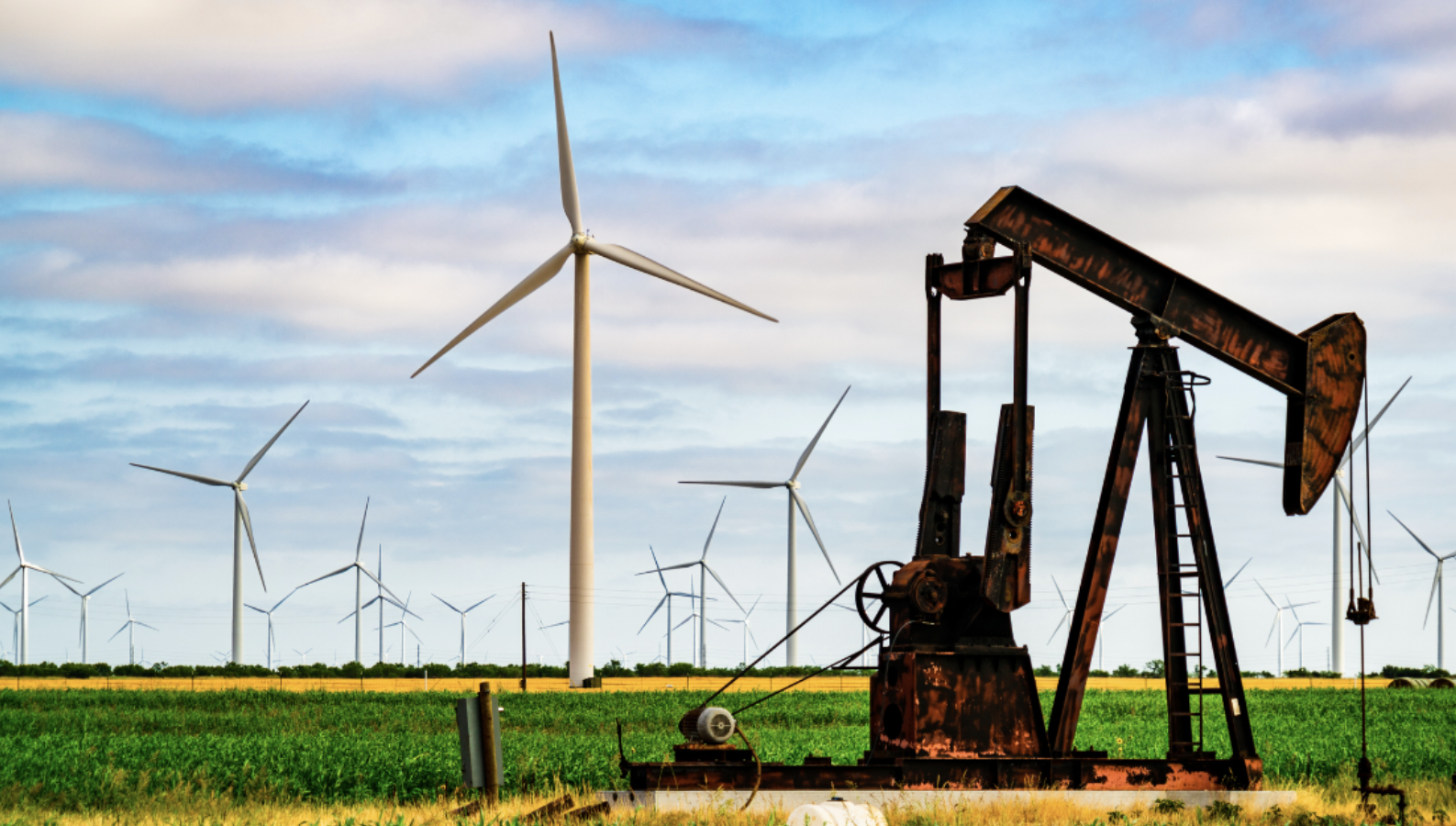
Major oil and gas corporations are planning to "increase their upstream oil and gas production" according to new research published today (17 June 2026) by the TPI Global Climate Transition Centre (TPI Centre) at the London School of Economics and Political Science (LSE).
The report analyses 22 leading global companies in two sectors critical to the low-carbon transition: 16 in oil and gas and six in diversified mining. These companies have a combined market capitalisation of over $2.8 trillion as of March 2026 and represent some of the world's largest extractive and key polluting companies.
Total oil and gas production across the 11 companies that disclose production guidance is set to reach 26.16 million barrels of oil-equivalent per day by 2030, representing a 14% increase from the 2024 level of 22.90 million barrels of oil-equivalent per day. This planned growth stands in contrast to the production decreases required to limit the rise in global average temperature in a 1.5°C or Below 2°C scenarios. It even exceeds the 5.9% global oil and gas demand increase projected for 2024-2030 under the Current Policies Scenario modelled by the International Energy Agency World Energy Outlook 2025, which is consistent with a 2.9°C global mean temperature rise by 2100.
The Transition Planning 2026: Decarbonisation strategies in oil and gas, and diversified mining report applies the TPI Centre's Net Zero Strategies (NZS) methodological assessment frameworks for oil and gas and diversified mining to evaluate how companies plan to deliver emissions reductions, and assess the robustness of their transition plans. The NZS assessment data and methodologies can be used to better understand companies' transition plans in hard-to-abate sectors.
For the oil and gas sector, operational emissions reduction targets are widespread, including more advanced methane management practices, although detailed decarbonisation plans remain limited. Many of the assessed companies have committed to the highest standard of methane measurement and reporting under the Oil and Gas Methane Partnership and have pledged to end routine flaring by 2030. However, operational emissions targets, including methane targets, are rarely supported by detailed implementation strategies specifying the actions, technologies and interim milestones, indicating that implementation plans still lag behind stated ambition.
Despite diversification plans into low-carbon business models, none of the assessed oil and gas companies are planning a shift of sufficient scale to align with any low-carbon scenario. The authors state that even for the best performing company, "maximum calculated share of low-carbon energy in total energy production reaches only 5% by 2030, which, together with the fact that most companies are planning to increase their fossil fuel production, suggests that emissions reduction targets are not being backed by credible transition plans".
The authors also confirm that "the diversified mining assessments reveal substantial variation across commodities and business models.” While some companies retain exposure to coal mining, others have divested or are planning to exit. Approaches to addressing downstream processing emissions from iron ore and bauxite also vary significantly.
Mining companies show limited plans to scale key transition materials, with only two of six companies planning production increases for copper, and one having completed the acquisition of a lithium mining company in 2025. No expansion plans have been disclosed for other critical minerals beyond copper, including lithium, despite the significant growth in supply needed to support the low-carbon transition.
For interviews with the authors, please contact Liam Collins on l.collins4@lse.ac.uk or gri.media@lse.ac.uk
1 This figure is subject to market-price and foreign-exchange fluctuations and, as the sum of self-reported data by TPI supporters, may double-count some assets.